Showing posts with label Literacy Strategies. Show all posts
Showing posts with label Literacy Strategies. Show all posts
Monday, March 31, 2025
Monday, March 17, 2025
Sunday, March 16, 2025
How to read a CAA(maths question) using - Graphic Organisers
Text form to Visual form: I Do, we Do, you Do (grid format to tease out the language features)
I have been working with starters (Do Nows) to help students familiarize themselves with CAA questions. While working on this, my learners found it difficult to comprehend some of the questions. Over the past three weeks, I have been collaborating with Mark Milford to develop a smoother process for understanding these questions. Here is the graphic organizer( Scafffold) he introduced to aid comprehension.

I included this graphic organiser into the starters: Here are last week's (7) questions we trialed with my year10 Learners: Link
My learners found it very useful and here are the answers:


How to answer? WUAC
NCEA suggest to use W(working)U(unit)A(answer)C(communication) :
Example:
Interest=240x5x3/100 (working)
=$36 (Unit/answer)
simple interest for $240 for 3 years at 5% is $36( communication)
Saturday, September 9, 2023
Monitoring continued week7 and 8
My learners have been working towards the derived grade examination. I have getting feedback weekly basis to improve my teaching practice to enhance their learning. I found Chunk Chew more effective in transferring Teacher ownership to student ownership. My learners are trying the visual way by writing on the whiteboard, the Aural way by recording their answers, and the kinesthetic way by teaching in the classroom.
Here is the week 7Feedback:


week8 feedback:


Saturday, August 26, 2023
Chunk Check Chew strategy(CCC's) by Kathleen Kryza
My learners are putting in a lot of effort to prepare for mock examinations. Last week, I began the revision process. I discovered that Chunk Check Chew is extremely beneficial for preparing for the mock examinations.
What is the Chunk Check Chew strategy?
Chunk -This involves breaking down study materials into smaller, manageable " chunks". Focusing on smaller pieces of information at a time can make learning more manageable and help prevent from overwhelmed.
Chew- Students process their answers in different ways. Group discussions and whiteboards.
Check-Students show their outputs-Show and tell?
Example:


Friday, July 14, 2023
working with Mark Milford CTD
I caught up with Mark Milford again to improve my literacy teaching strategies. Here is an example of one of the practice tests.

Mark Milford suggested I modify the practice test with the following:
(1) Students highlight the keywords and write predictions.
(2) What is a Navigator? port?
(3) Spot Mooring? (Mathtown) peninsula?-Match these with the diagram before the start the practice test?


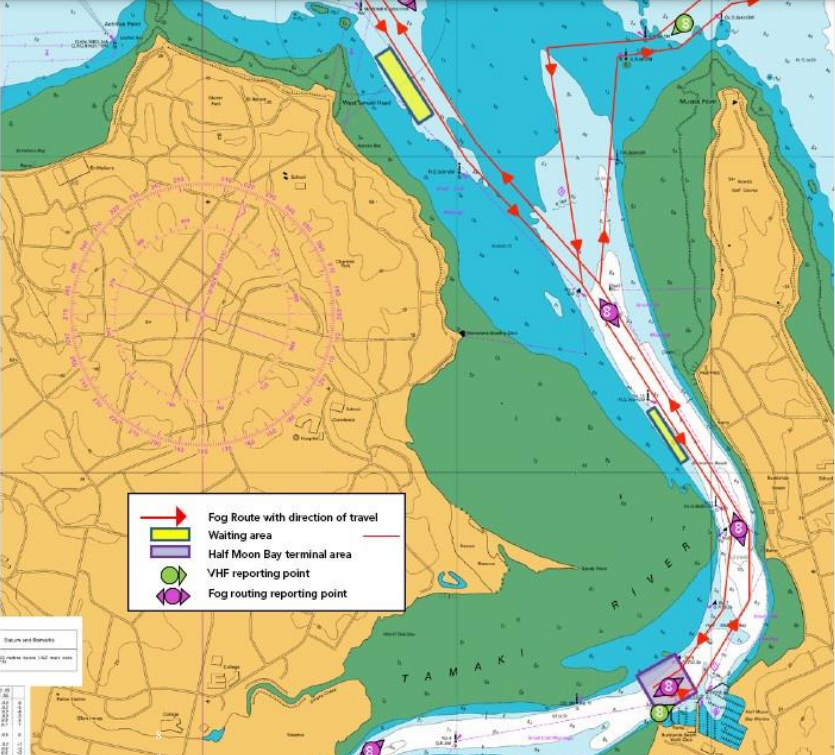
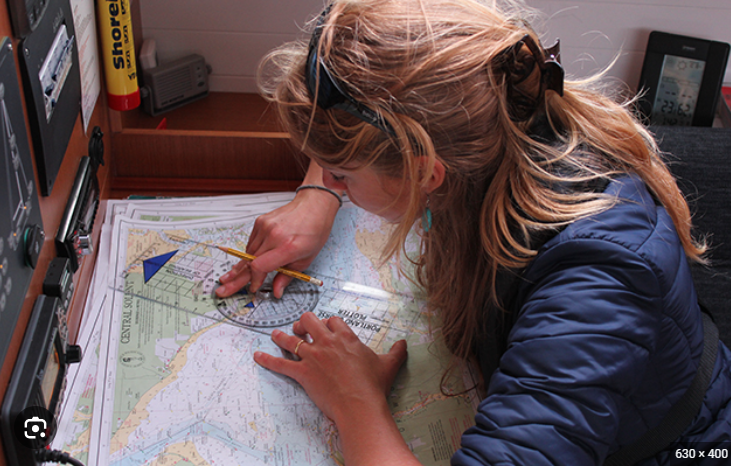

Here is the modified version of the practice test.

I found Miro, an online board, very useful for Matching activities to review straight lines, Parabolas, Hyperbolas, circles, and tangents.
(write out thinking, I ask…, next I ask….. If its……. Then it is a)


Sunday, June 25, 2023
Working with Marc Milford
I caught up with Marc Milford last week to upgrade my literacy skills. Marc helped me how to use the think-the-loud strategy to identify different types of graphs and match the graphs with the equations as learners find it challenging to identify the shapes and equations as they are not familiar.
Here are the instructions:

First, ask if it is a Straight line and then match it with straight-line equations.
Second, ask if it is a Parabloa and then match it with the Parabolic equations.
Third, ask if it is a circle and then match it with the circle equations.
Fourth, ask if it is a hyperbola and then match it with the hyperbolic equation.


I am planning to try it with my learners next week and he also suggested using real-life examples to make the topic more meaningful.
Miro online board
What is Miro? Miro is an online collaborative whiteboard platform allowing collaboration, brainstorming, and organizing ideas visually. It provides a virtual canvas where learners can work together in real-time, regardless of their physical location.
How to use Miro online board- Here are the instructions. Link
I used this Miro online board as a matching activity to recognize the different types of graphs and general equations. Learners really enjoyed it and engagement was very high.


Sunday, May 28, 2023
PEE structure strategy
Last I taught my learners how to use PEE to interpret the Arrow diagram
Here is an example: we did a class discussion.


Sunday, May 21, 2023
Professional reading 3
Last week I had the privileged to attend management holders PLD at the due drop event center at Manukau. One of the presenters was mentioning about Universal Design Learning(UDL) and here is the guide. I found this very useful for all my classes.
What is UDL? is an educational framework that offers multiple ways for students to access, demonstrate knowledge, and give equal opportunity to learners. It promotes flexibility, and abilities, and accommodates different learning styles.
How to plan using UDL:

Design considerations in secondary settings:

Five suggestions to implement this:
(1) Prepare the environment for flexibility.
(2) Refine and support goal setting.
(3) Match teaching methods to student preferences.
(4) Ensure materials are flexible and accessible.
(5) Design assessment to enable students to demonstrate their understanding.
How can I apply UDL in my classroom:
(1) Provide multiple means of representation- using audio, video, visual aids, and recordings to support understanding.
(2) Creating multiple means of engagement-by offering choices of topics, assignments, and activities.
(3) Offering multiple meanings of expressions -Exprees their knowledge and understanding through assignments, presentations, visual projects, etc.
Professional reading 2
In my Inquiry year 12Mas(Statistics) class, I was looking for more strategies to strenghen my learners' literacy strategies. I can across a literacy guide, here is the link. It is about 17 Literacy strategies for teachers to improve their classroom practice.
What are literacy strategies? Are the techniques and approaches used to develop enhanced speaking, listening skills, writing, and enhanced writing Learners aim to improve critical thinking, comprehension, critical thinking, and effective communication.
Here are the 17 strategies:
(1) Annotate the text-This strategy encourage students to provide their own commentary on a text by highlighting keynotes, writing text or circle, etc.
(2) Working in teams- This teamwork enhances and deepens the understanding of literacy.
(3) Read loud-Improve their active listening skills.
(4) Host a book recommendation event-
(5) Encourage students to choose their own book-
(6) Making a geographically map-Useful practice when attempting to accommodate different academic strengths.
(7) Conduct individual meetings with students-I found this useful for my slow learners.
(8) Offer reading awards-
(9) Perform the text-giving students the opportunity to both write and perform so they can experience both mediums.
(10) Provide visual organizer- flow charts, arrows, etc.
(11) Play classroom games-
(12) Use a mnemonic device as a memory tool.
(13) " Survey-Question-Read-Recite-Review:
(14) Engage with the author-
(15) Draw or paint-
(16) Use time reading session-
(17) Assign journaling project-
By incorporation these literacy strategies into my statistics class, I can support my learenrs' comprehension, critical thinking and overall success in learning and applying statistical concepts.
Sunday, April 2, 2023
PEEL structure
Analysis:
We used PEEL structure to write the Analysis. My learners are confident with PEE already from the first topic and I introduce L only.
P: Point
E: Explain
E : Numerical Evidence
L : Link to the population
Here is an example:


Thursday, March 9, 2023
Meeting with Dr Jannie
I caught up with Dr Jannie with our 2.1 Coordinate geometry practice test.

Learners find it comfortable with skills(finding gradient, length, and midpoint), however,
communicating with the finding is their challenging part.
Their challenging part was discussion and reasoning.
Discussion -what do they do? How did they do? With clear communication.
Reasoning - why you used this type of strategy and method. Photo taken with
answers and made an audio recording to go over it. I found this strategy very useful to rewind
And boost their learning. Here are the answers with audio recording.

After all the different types of approaches, learners have successfully finished their first internal and will be moving on to the second topic.
.jpg)

Subscribe to:
Posts (Atom)
-
 Tweak in teaching in due to covid-19 After Term 1,week 8, I did a tweak my teaching due to the COVID-19 lockdown. Learners access lessons...
 -
 We started Term 2 in full swing with online teaching. I gave all the learners' information and teaching content on my site . I planned ...
 -
I had the privilege to present Burst and Bubbles at the TC staff room recently. Here is the PPT.