Showing posts with label Collaborative Plan. Show all posts

Monday, June 3, 2019

My Colloborative Inquiry Yr11- Evaluation

WRFC(5) Begin to collect evidence and data and come to the next session ready to share your preliminary findings about the nature and extent of the student challenge i.e. using your baseline student data and evidence

Transformation Geometry Evaluation:
I have collected individual students' PAT results from kamar blog post is here.
Data:


Trends and students’ voice:
I have just finished our marking, moderation and making key tags on this internal. 
Ms Karen Ferguson spent lots of time making key tags which is very time consuming.
13 students gained Achieved, 9 gained Merits, one was absent and two of them are still working on the task as they are ESOL students. Dr Yanee’s strategies worked too and I am going to continue to work with her to get better grades for the next topics.
There is a shift in the learners’ achievement. This was a collaborative activity task, cultural based, interactive and fun topic. I am unable to do comparison as we have implemented this task for the first time in recent years. When the results for this standard are compared with the results for the first topic results in term1(same group of learners) there is a increase in the number of Merit achieved.
Definitely this two credit Achievement Standard is going to contribute towards Numeracy credits.
My colleagues and I were able to develop professional learning by interacting with each other as well as with the learners.
According to the student voice they also found the task really interesting.


Key tags


Next step: Going to work with Dr Yanee.


Thursday, April 18, 2019

My Collaborative Inquiry Year 11

WFRC#(4) Describe the tools/measures/approaches you plan to use to get a more detailed and accurate profile of students’ learning in relation to that challenge. Justify why you chose these approaches and tools
Minor Collaborative inquiry - Can I improve the Year 11 numeracy credits by collaborating with one of my colleagues (one of my hunches!) and also the technology department?
My hunches are- I need to apply literacy strategies  and SOLO taxonomy effectively in order gain Achievement/Merit/Excellence. Hence, how to carryout an effective Collaboration Inquiry?

The Problem to be solved is:
First Name
Ethnicity
PAT
Stanine
2018
Transformation Geometry
(AS91034)
2 Cr
Student 1
Maori
4


Student 2
Tongan
2


Student 3
Niuean
3


Student 4
Cook Island Maori
4


Student 5
Cook Island Maori
3


Student 6
Maori
3


Student 7
Tongan
new


Student 8
Tongan
2


Student 9
Samoan
2


Student 10
Tongan
3


Student 11
other
new


Student 12
Maori, Indian
3


Student 13
Cook Island Maori
3


Student 14
Cook Island Maori
3


Student 15
Filipino
new


Student 16
Cook Island Maori
3


Student 17
Tokuluan maori
new


Student 18
Tongan
3


Student 19
Cook Island Maori
4


Student 20
Tongan
4


Student 21
Tongan
3


Student 22
Cook Island Maori
1


Student 23
Tongan
3


Student 24
Tongan
new


Student 25
Maori
new


Student 26
Maori
ab


 The above data shows that the students range from Stanine 2-4.
My challenge will be in figuring out  how to accelerate teaching within a short period.
There are 3 international students struggling with the writing and reading skills

My Tools/Measures/Approachers are:

  • Knowing the learner-Approach according to ethnicity background and past year PAT results using Kamar, helps to apply differentiated teaching according to their ability.
  • Formative assessments and practice tests in internally assessed topics will help students gain Numeracy credits.
  • Student Voice- Instead of simply making assumptions about how best to support students, I am interested in collecting student voice using; google forms, Blogging and videos.
  • Promote Mathematical literacy/reading in class to understand the Merit/ Excellence questions to gain better grades.
  • Teaching SOLO taxonomy to understand the breakdown of Achievement, Merit and Excellence in NCEA to gain endorsements.
  • Using work space and videos to set effective lessons in revising and reviewing before tests.
  • Using literacy strategies to understand new concepts.
  • Incorporate google drawing into Transformation geometry to increase engagement.
  • Peer teaching- Learners feel more comfortable and open when interacting with their peers.
  • Weekly catch ups with Mr Nilesh Krishna and Ms Karen Ferguson for effective collaboration.
  • Creating key tags using design to make this topic meaningful.

Saturday, April 13, 2019

Term1-Year 11- My Collaborative Inquiry Reflection


#1.  Raise Māori student achievement through the development of cultural visibility and responsive practices across the pathway as measured against National Standards and agreed targets for reading Years 1-10 and NCEA years 11-13. As a CoL leader within school I  am more interested in inquiring about student learning and my own practice.


My Learners have completed the First stage of the internal on the last day of the school.
And they will be completing the second stage(Laser cutting)  next term.

Learners' Blog

Monday, April 8, 2019

Meeting with Dr. Janni van Hees

Meeting with Dr. Janni van Hees

As part of our Collaboration Inquiry, and I met with Dr. Janni van Hees last week, helped me with few guidelines to describe Transformations hence students are struggling to describe what they have drawn in the practice task.
And  part of my challenge to use responsive practices as a pathway to achieving students will be reflect on their learning, this will help to understand where they are on the pathway to achievement.

Practice task: Create a shape using Reflection, Rotation, Translation, Enlargement and Describe.

Practice test


  •     Learners are to record all the keywords of Transformation Geometry.


  •  Learners are saying it with the (articulate) accurate Mathematical language →Learners are to write it ↔ teacher feedback
  •     Thinking fluency and writing fluency must be accurate.
  •    Write a cultural story and a Mathematical story behind the design.


Friday, April 5, 2019

Year11 Collaborative Inquiry -Intervention

Meeting  with Ms Karen Ferguson

#1.  Raise Māori student achievement through the development of cultural visibility and responsive practices across the pathway as measured against National Standards and agreed targets for reading Years 1-10 and NCEA years 11-13. As a CoL leader within school I  am more interested in inquiring about student learning and my own practice.

 Transformation geometry-Learners engagement is huge, they enjoy the content and looks achievable by most of them. They engaged  further with cultural designs.

Today Mr Nilesh Krishna and I caught up with Karen Ferguson from the Technology department to incorporate laser cutting into the unit. She showed us how laser cutting works and how important it is to draw thick lines using google drawing to make clear designs on key tags. She is also going to visit our classes this week to do some team teaching and will make a few key tags as a trial practise.


High light of Ms Karen Ferguson's  teaching 
 Ms Karen Ferguson came to my class on the 03/04/2019 and taught the students about how they should draw most effectively to get the best result from the laser cutter. She emphasized to draw thick lines and demonstrated this through a drawing. Here is the example:

My learners seem to be enjoying this topic and most of them are aiming  for Merits. My next lesson will be how to describe this using SOLO taxonomy.


Monday, April 1, 2019

Year 11-Collaborative Inquiry Question # 1 ,2 &3

Inquiry Question 1
Summarise the challenge of the students learning you plan to focus in this
Collaborative inquiry.
My yearly focus is for students to gain at least 10 credits to get their Numeracy by the end of the year.
In order to achieve this I am using a collaborative approach to ensure a  100% passing rate.
To achieve this there has been the incorporation of culture and practicality to cater for more kenesthetic learners.
There are four Maori, seven Cook Island Maori, nine Tongans, one Samoan, one Tokelauan Maori,
one Indian Maori and one other in the class.
I gathered the following information from KAMAR Tamaki College and I found this very
useful to apply in differentiated teaching to further help students.
My year 11 Class:
First Name
Ethnicity
PAT
Stanine
2018
Transformation Geometry
(AS91034)
2 Cr
Student 1
Maori
4


Student 2
Tongan
2


Student 3
Niuean
3


Student 4
Cook Island Maori
4


Student 5
Cook Island Maori
3


Student 6
Maori
3


Student 7
Tongan
new


Student 8
Tongan
2


Student 9
Samoan
2


Student 10
Tongan
3


Student 11
other
new


Student 12
Maori, Indian
3


Student 13
Cook Island Maori
3


Student 14
Cook Island Maori
3


Student 15
Filipino
new


Student 16
Cook Island Maori
3


Student 17
Tokuluan maori
new


Student 18
Tongan
3


Student 19
Cook Island Maori
4


Student 20
Tongan
4


Student 21
Tongan
3


Student 22
Cook Island Maori
1


Student 23
Tongan
3


Student 24
Tongan
new


Student 25
Maori
new


Student 26
Maori
ab


The above data shows that the students range from Stanine 2-4.
My challenge will be in figuring out  how to accelerate teaching within a short period.
There are 3 international students struggling with the writing and reading skills
so  Dr. Janni van Hees will help cater to these students next Friday.


Inquiry Question 2
Describe how and why you have selected this challenge of student learning.
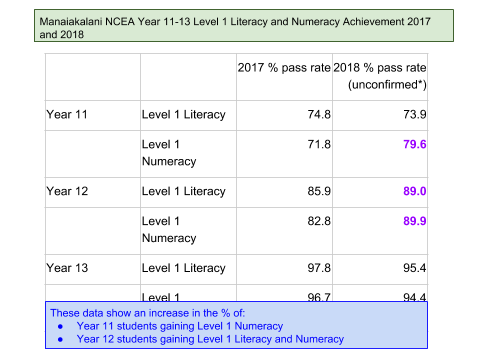
Locate your inquiry in the context of patterns of student learning in Manaiakalani overall. 
I used the Woolf Fisher research findings shared with our Manaiakalani Cluster in February
of this year to develop my inquiry in order to shift students in Numeracy.
Raise Māori student achievement through the development of cultural visibility
and responsive practices across the pathway as measured against National
Standards and agreed targets for reading NCEA years 11-13.

Inquiry Question 3
Explain why you judge this to be the most important and catalytic issue of learning
for this group of learners this year (In chemistry, a catalytic substance one 
which increases the speed of a chemical reaction).
The main key to lifting Numeracy is to push reading, comprehension and writing.
I believe that by practicing literacy strategies repetitively it will enable more students to achieve
at least a Merit.
When we work together with teachers to identify common challenges we can analyse data, test and
challenge our instructional approach. This collaboration approach adds motivation and values
However my catalyst issues are:
I am confident that based on CoL  Professional Development from Dr. Janni van Hees ,
the focus on Language will help me unpack my catalyst issues. 
I am very interested in seeing if the students from my focus group are able to grow
in their understanding of unpacking topic rich vocabulary with the goal of improving
literacy and numeracy skills as this topic is an English rich task.
Issues are:
How confident are they with key competencies? Are they managing themselves?
Do my learners really understand the question?

Do they know how to manage time effectively and are consistent with their learning
or are they leaving everything to the last minute?
Do they understand SOLO taxonomy to understand Achieve/Merit/Excellence?

Do they understand PEEL structure to write up to the higher level?

Are they doing enough practice before tackling the real internal?

Are they digitally confident or  do they need more practice on Google drawing?

How can make significant progress in  a year ?

TC Staff mtg PLD